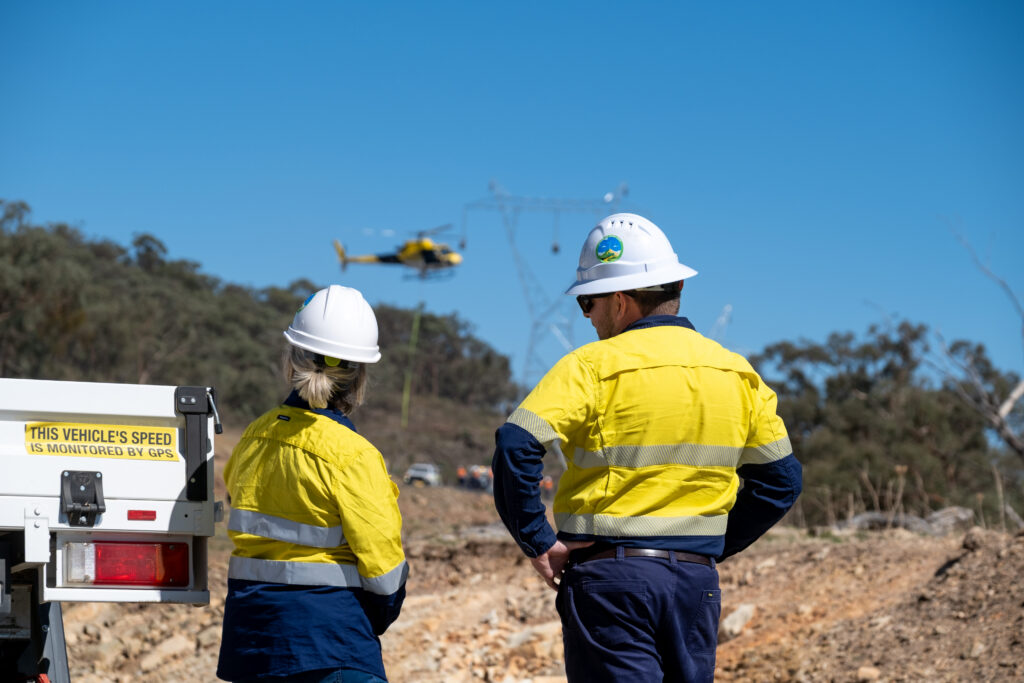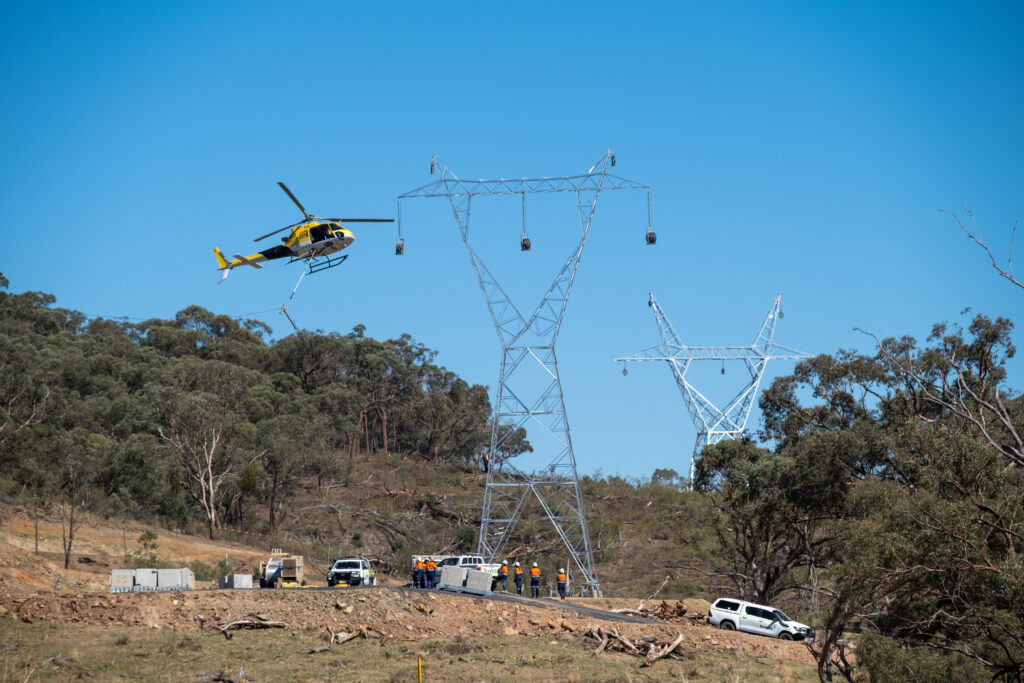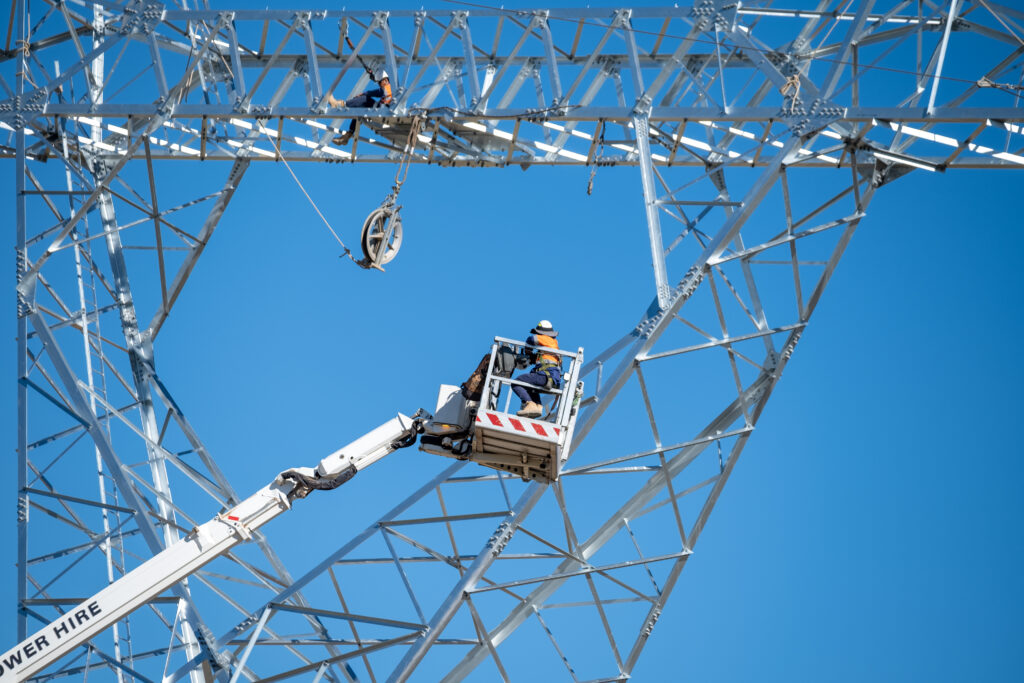
NSW’s clean energy future is one step closer, as a helicopter took to the Central West sky to start stringing transmission lines at Squadron Energy’s Uungula Wind Farm. More than 11km of 330 kV single circuit transmission line is being attached to 28 towers over the coming months to connect Uungula Wind Farm into the electricity grid.
Squadron Energy General Manager Contracts and Controls Mark Hunt said the start of transmission line stringing is an exciting step towards the project generating 414MW of power once it’s completed.
“I want to thank the local community, our contractors and our partners for their support to reach this stage of the project, which is creating 262 jobs and investing $41 million in the regional economy.
“We are continuing to work hard to make sure that the project is creating a positive legacy in the region by investing in long term projects that matter to the community – including partnering with Dubbo Regional Council to deliver a new advanced wastewater treatment facility in Dubbo,” Mr Hunt said.
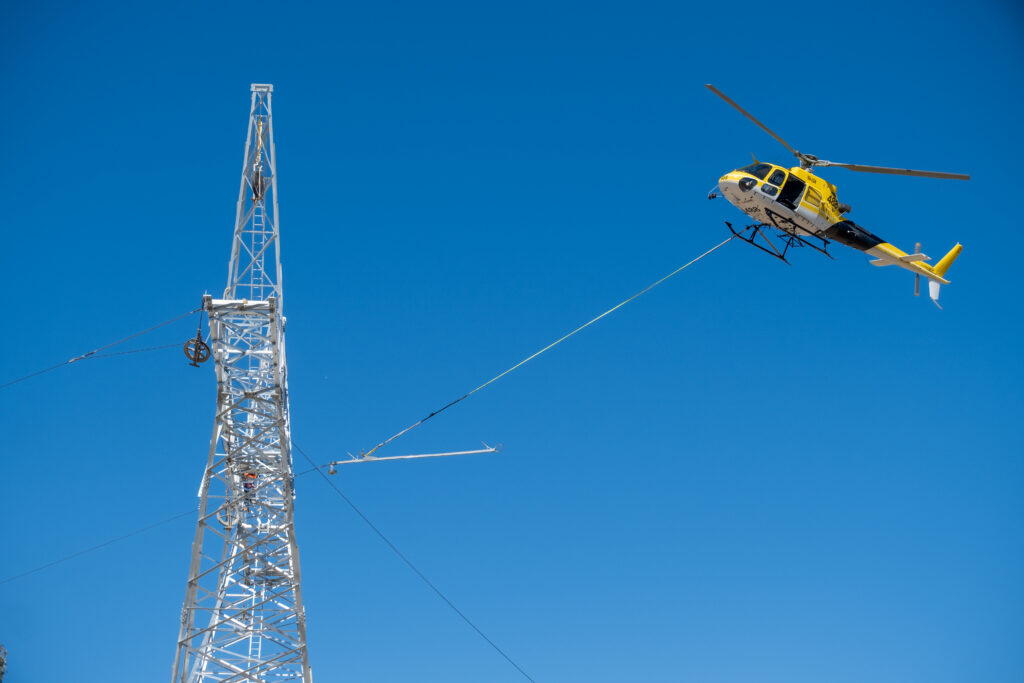
Squadron Energy has contracted Lumea, part of the Transgrid Group, to build, operate and maintain the Uungula Wind Farm substation, switching station, and transmission lines.
Executive General Manager for Lumea Craig Stallan said the helicopter stringing was undertaken by the highly skilled team at Leading Edge Helicopters, working closely with Transgrid’s aviation and safety experts.
“This approach will support the safe, efficient and timely stringing of transmission lines at Uungula Wind Farm, which Lumea is pleased to deliver in partnership with Squadron Energy,” he said.
“We look forward to continuing our work together on this project, an important contributor to the renewable energy transition in NSW.”
Construction of the wind farm is well underway with:
- concrete foundations for 30 of 69 turbines completed
- turbine components, including blades, on track to be transported from the Port of Newcastle in the coming months.
Uungula Wind Farm is located on Wiradjuri Country, 14km east of Wellington, NSW. Once complete, it will generate enough electricity to power the equivalent of more than 220,000 homes and prevent more than 560,000 tonnes of carbon emissions being released into the atmosphere annually.